By Kevin Ra, Chairman and Founder at Parcel Revenue Corporation
Local governments are under increasing pressure to tackle the growing problem of vacant and at-risk properties. But the traditional tools they’ve relied on — code enforcement, land banks, and vacant property registries — all suffer from the same fatal flaw:
👉 They act too late.
By the time these systems respond, the damage has already been done: lost tax revenue, neighborhood decline, and resident frustration.
The Virtual Land Bank Platform (VLBP) was built to change that. Here’s how it works — and why it’s becoming the go-to solution for cities and counties that want to get ahead of the vacancy crisis.
Traditional Methods: Code Enforcement, Land Banking & Vacant Property Registries
Local governments typically rely on three core systems to manage problem properties:
1. Code Enforcement
This system ensures property maintenance and legal compliance — but it only engages after something goes wrong. It’s triggered by visible signs of decline or complaints from residents, making it inherently reactive.
2. Land Banking
Land banks acquire distressed or unwanted properties and hold them for future redevelopment. They’re useful for the worst-case scenarios, but they activate only after ownership has failed, and they often operate slowly and under tight resource constraints.
3. Vacant Property Registries
These require owners to report when a property becomes vacant. But they rely on self-reporting, meaning they often miss properties where owners are deceased, avoiding compliance, or unaware of their obligations. Most registries capture less than 50% of actual vacancies.
Each tool plays a role, but all of them wait for problems to escalate before stepping in.
A New Model: Predictive Vacancy Prevention
The Virtual Land Bank Platform flips the model by predicting which properties are at risk of going vacant before it happens.
Powered by a proprietary Predictive Vacancy Engine, the VLBP analyzes a range of indicators — from court filings and loan types to transaction histories and neighborhood-level risk — to spot early warning signs of distress.
It doesn’t just predict vacancy. It activates workflows that help resolve the underlying issue — before residents walk away, before the blight spreads, and before public trust erodes.
Why This Matters for Cities and Counties
When properties go vacant, the costs stack up fast:
- Property tax revenue plummets
- Income and sales taxes drop as people leave
- Speculators swoop in, buying low and doing the bare minimum
- Blight spreads, triggering more code calls, more complaints
- Constituents lose trust and accuse leadership of “doing nothing”
The VLBP breaks this cycle by allowing cities and counties to:
- Identify and prioritize at-risk parcels
- Intervene early with targeted solutions
- Route properties to qualified, local rehabbers and owner-occupants
- Prevent long-term vacancy and repeat-blight cycles
Built for Big Investors. Rebuilt for Local Governments.
The VLBP wasn’t originally created for local governments.
In 2022, it was redesigned to help Blackstone’s Home Partners of America purchase up to 12,000 homes a year. At that scale, the platform could have accelerated investor control over housing stock in struggling communities.
But instead of going down that path, we chose a different future.
With support from Google’s in-house engineering team, the platform was rebuilt specifically to serve cities and counties — giving local governments the same predictive power previously reserved for Wall Street.
Now, that technology is being used to protect families, prevent displacement, and stabilize neighborhoods.
The Results Speak for Themselves
In pilot implementations, the platform has:
- Helped identify and resolve risks before foreclosure
- Routed properties to qualified rehabbers, not flippers
- Enabled FHA-financed sales to new owner-occupants
- Prevented properties from ever entering a vacant, blighted state
It’s not just a theory. It’s already happening — and it’s working.
This Is About More Than Software
The Virtual Land Bank Platform isn’t another administrative tool. It’s a neighborhood stabilization engine — built to protect your revenue base and restore community trust.
With the VLBP, local governments can:
- ✅ Prevent vacancies before they happen
- ✅ Protect and grow parcel-based tax revenue
- ✅ Route properties to responsible buyers, not speculators
- ✅ Support intergenerational wealth and local homeownership
- ✅ Deliver visible, measurable results for residents
Take the First Step
📥 Download the Free Guide:
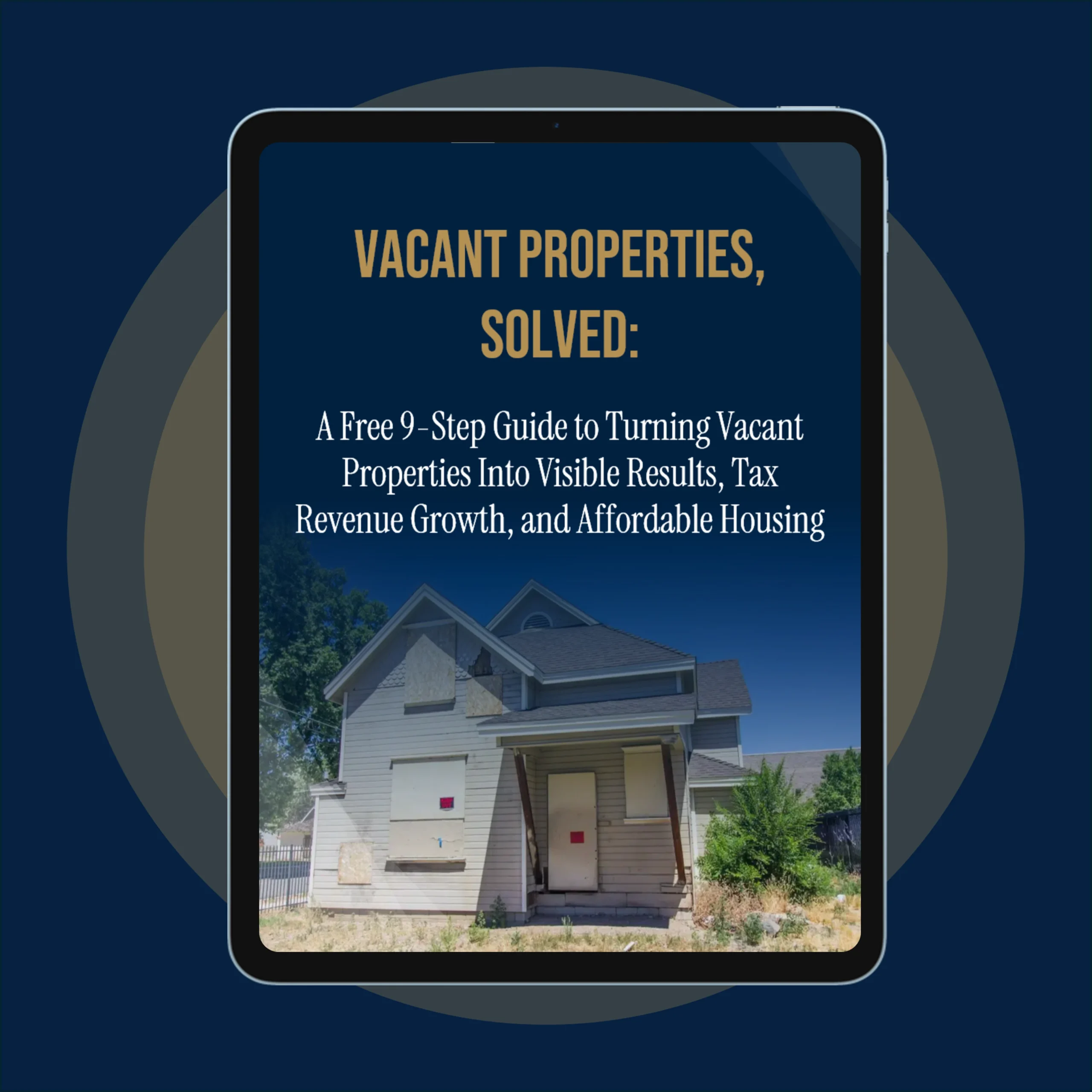
“Vacant Properties, Solved: A 9-Step Guide to Turning Vacant Parcels Into Tax Revenue and Affordable Housing”
📞 Talk to an Expert
Learn how the platform works in your city or county.