Why parcel-level prioritization matters when sales tax and property tax are part of your budget.
For cities that rely on local revenue — whether from property tax, sales tax, or both — vacancy is not just a quality-of-life issue. It’s a volatility problem.
Every vacant storefront, underutilized parcel, or stalled corridor weakens the conditions that local revenue depends on. Foot traffic declines, businesses become less durable, consumer confidence erodes, and revenue becomes harder to forecast and defend.
The challenge for city leaders isn’t understanding that vacancy matters. It’s controlling it in a way that finance directors, councils, and auditors can see and trust.
Most cities track vacancy reactively. Properties show up after complaints accumulate, enforcement costs rise, or revenue declines become visible. By then, the city is defending losses instead of preventing them.
Parcel Revenue’s Virtual Land Bank Platform (VLBP) changes that dynamic by giving cities a proactive, parcel-level control system for vacancy risk.
VLBP helps cities transform vacant properties into sustainable income, sales, and property-tax revenue growth by identifying which properties pose the greatest fiscal risk, prioritizing action where it protects revenue first, and coordinating repeatable workflows that move parcels toward productive use.
Instead of treating all vacancies the same, VLBP allows cities to focus on the parcels most likely to undermine corridor performance, revenue stability, and public confidence. It connects property conditions, ownership realities, and feasible interventions into a single operating pipeline.
This matters because revenue defense is about predictability. Councils and finance teams want to know where risk is accumulating, which actions are underway, and whether conditions are improving. VLBP provides measurable indicators cities can use to explain budget decisions, justify resource allocation, and demonstrate progress before revenue declines appear in financial statements.
Because the VLBP framework is patent pending, it provides a level of defensibility and operational discipline that cities can’t achieve with ad hoc tools. It replaces reactive enforcement with managed prevention and replaces anecdotal explanations with documented outcomes.
Cities using VLBP are better equipped to stabilize corridors, reduce chronic problem properties, and maintain revenue confidence over time. They spend less energy explaining what went wrong and more time showing what’s being controlled.
Vacancy introduces uncertainty into local revenue. VLBP restores control.
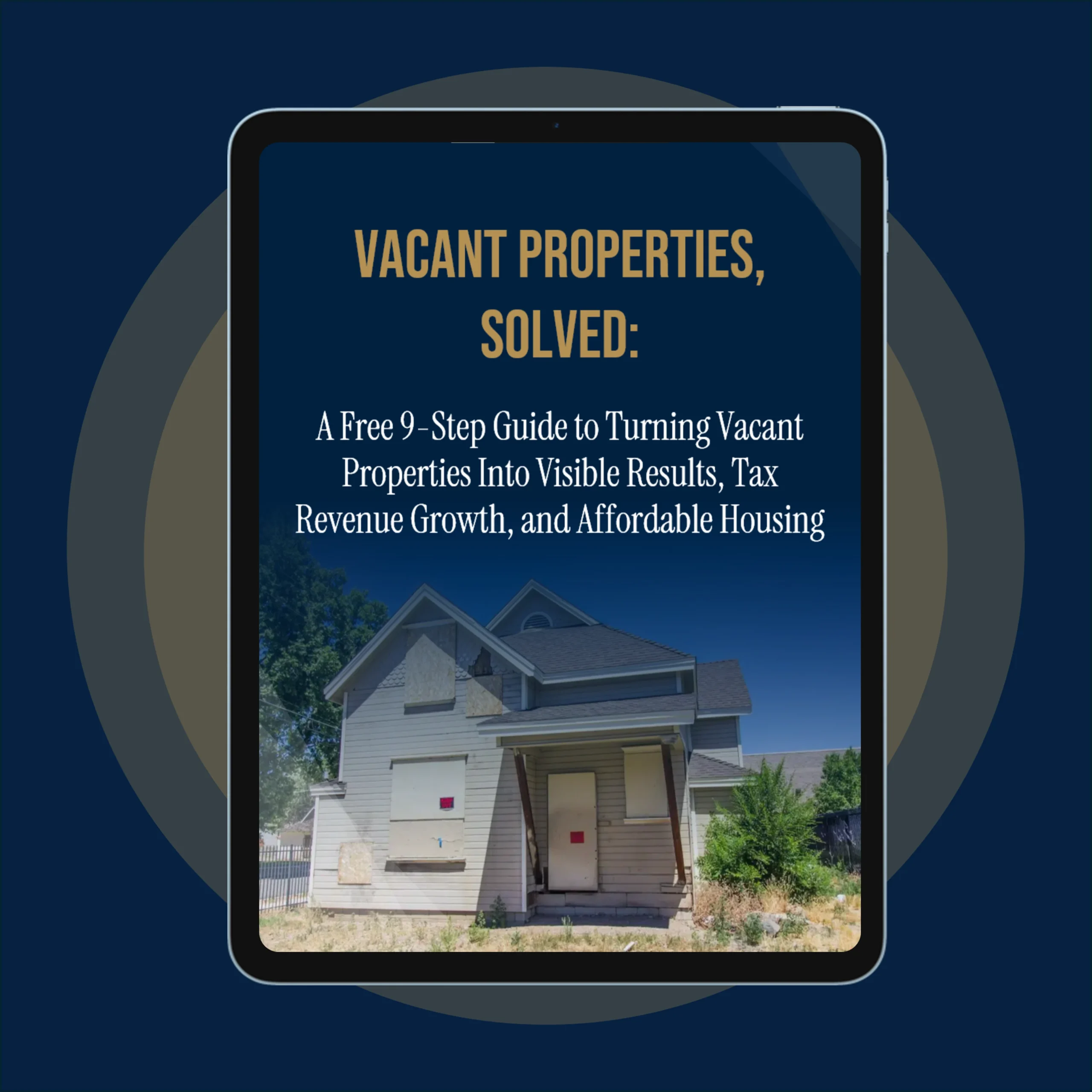
If your city is looking for a practical way to defend and grow local revenue while reducing blight and improving constituent outcomes, download Vacant Properties, Solved: A Free 9-Step Guide to Turning Vacant Properties Into Visible Results, Tax Revenue Growth, and Affordable Housing, or talk to an expert about applying VLBP to your highest-risk corridors.