Across the country, local governments are grappling with a hidden crisis: more property owners on the brink of losing their homes, and too many of them ending up in foreclosure before public systems ever intervene. When a homeowner loses their property — especially to a short sale, auction, or investor takeover — cities lose tax revenue, neighborhoods lose stability, and families lose equity and generational wealth.
Local governments need tools to help distressed homeowners early, before properties go vacant and fall into speculative hands. That’s why housing counselors, legal support networks, and predictive technology are now essential parts of effective municipal housing strategy.
Why Distressed Homeowners Matter for Cities
When homeowners fall behind on mortgage payments or face legal issues like probate or tax foreclosure, the consequences ripple far beyond one house:
- Property tax, income tax, and sales tax revenue is lost
- Neighboring properties suffer value decline
- Code calls and service costs go up
- Speculative investors swoop in and buy at auctions
- Vacancies spread and community identity erodes
Helping owners stay in their homes or transition responsibly is not just good policy — it’s fiscal protection.
Real Help Exists: Counseling and Support Networks
Local governments don’t have to go it alone. There are established counseling agencies and programs that provide free or low-cost support for distressed homeowners, including:
Federal VA Foreclosure Assistance
Veterans and surviving spouses can access counseling even if their loan isn’t VA‑guaranteed. If a VA‑guaranteed mortgage is more than 60 days delinquent, a VA loan technician is automatically assigned to review the loan and help explore options. These include:
- Repayment plans
- Special forbearance
- Loan modification
- Selling with time to arrange a private sale
- Short sale or deed‑in‑lieu of foreclosure
(These options come from the U.S. Department of Veterans Affairs counseling guidance; contact a VA loan technician at 877‑827‑3702 for assistance and beware of scams.)
Veterans at risk of homelessness can also connect with services through the National Call Center for Homeless Veterans at 877‑424‑3838.
NACA: Comprehensive Housing Counseling and Foreclosure Prevention
The Neighborhood Assistance Corporation of America (NACA) is one of the largest HUD‑certified non‑profit counseling organizations in the U.S. Its counselors help homeowners, renters, and buyers with budgeting, financial readiness, foreclosure prevention, and housing stability. NACA’s Member Assistance Program (MAP) includes comprehensive support if mortgage payments become unaffordable, including financial counseling and payment agreements designed to help homeowners avoid losing their homes.
NACA also offers broader homeowner and homebuyer education, advocacy against predatory lending, and long‑term support through its network of offices and certified counselors.
NID Housing Counseling Agency (NID‑HCA)
NID Housing Counseling Agency is a national HUD‑approved intermediary that offers foreclosure prevention, pre‑purchase education, post‑purchase counseling, rental and financial management, and reverse mortgage advice. These services are free or low-cost and available virtually or in person, helping homeowners navigate default risks and mortgage challenges.
Local governments can tap into networks like HUD‑approved counseling agencies (including NID‑HCA) to extend their support capacity, giving residents expert guidance at the right time.
A Proactive Municipal Approach: Predict & Protect With AI
Helping homeowners is one thing — catching them early enough is another. Traditional municipal tools like code enforcement or land banking intervene after properties decline. By then, the city is fighting loss, not preventing it.
That’s why predictive intervention is gaining traction. Modern platforms can identify at-risk parcels before they become vacant, routing owners to counseling resources and qualified professionals that can help them retain their homes — or transition responsibly without abandoning equity.
???? DORE: Distressed Owner Resolution Engine (AI Feature)
One key element of this strategy is a built-in AI feature like the Distressed Owner Resolution Engine (DORE) inside a Virtual Land Bank Platform. DORE continuously analyzes property risk — such as tax delinquency, foreclosure timing, probate flags, and more — and triggers early outreach and support workflows:
- Matches owners with HUD-approved counselors
- Connects veterans to the right VA foreclosure assistance and specialists
- Rolls in referrals to HUD-approved counseling agencies like NID‑HCA
- Presents owners with options BEFORE speculators do
By taking this early action, cities can help owners stabilize their finances, work with servicers, explore loan modifications, or pursue short sale alternatives that protect credit and community stability.
Why Traditional Tools Fall Short
Local governments traditionally rely on:
- Code enforcement — only after property deterioration is visible
- Vacancy registries — tracking instead of preventing
- Land banks — acquiring after abandonment
But by the time these systems activate:
- ???? Municipal revenue has already eroded
- ???? Blight is visible
- ???? Investors are already circling
- ???? Families have lost equity and stability
Predictive engagement avoids these outcomes by identifying risk earlier and steering owners toward proven support resources and solutions — increasing the chances they can stay in their home or make choices that preserve their financial future.
How This Helps the Community and the Bottom Line
When local governments enable early intervention:
- ✅ More homeowners avoid foreclosure
- ✅ Fewer properties become vacant
- ✅ Tax revenue stays stronger
- ✅ Neighborhoods stay stable
- ✅ Complaints and emergency service demands decline
- ✅ Long-term economic and political wins become visible
This is not just an ethical goal — it’s fiscal stewardship.
???? Download the Free Guide
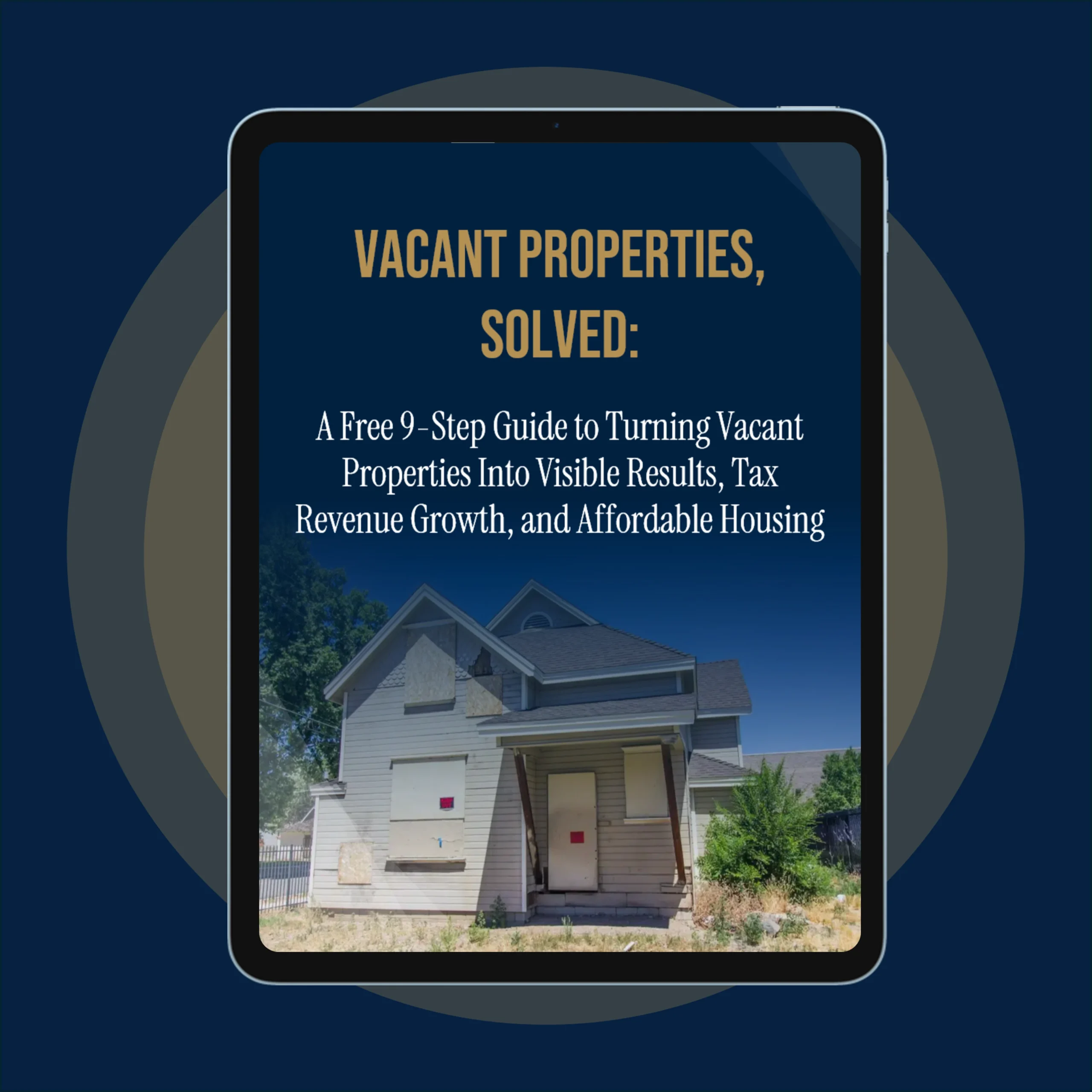
Vacant Properties, Solved:
A 9‑Step Guide to Turning Vacant Properties Into Visible Results, Tax Revenue Growth, and Affordable Housing
Learn how stopping investor takeovers, helping distressed owners, and keeping homes in families’ hands preserves revenue and community stability — without hiring more staff or expanding red tape.
???? Talk to an Expert
Discuss how your city or county can integrate predictive workflows and partner with counseling networks to protect homeowners and property values before it’s too late.
Helping homeowners early isn’t charity — it’s smart governance. Protect your residents, preserve your tax base, and rebuild vibrant neighborhoods with the right tools in place.