The affordable housing crisis isn’t just about demand — it’s about cost.
Across the U.S., local governments are spending $232,000 to over $600,000 per unit to build affordable housing through federal programs and local subsidies. In cities like San Francisco, even a single affordable unit can exceed $600K in total costs.
The reasons are familiar:
- High land prices
- Expensive materials
- Construction labor
- Complex financing structures
- Bureaucratic permitting
- Multi-layered subsidies
But what if there was a more efficient path — one that requires no new construction, no land acquisition, and no direct public subsidy?
There is. And it starts with the vacant homes you already have.
From Vacant to Occupied: A Smarter Affordable Housing Strategy
The Abandoned Homes Pilot Project (2018–2025) in Cuyahoga County, OH proved that local governments can deliver affordable units at a fraction of the cost — simply by transforming the properties they already own or influence.
The Results:
- Vacant homes converted to affordable owner-occupied units in Cleveland’s Lee-Harvard neighborhood
- Average cost per unit: ~$150,000 — covered entirely by FHA end-buyer financing
- No public subsidy, no land cost, no new infrastructure
- Units were move-in ready and compliant with HUD and municipal rehab standards
Compare That to the National Average
According to HUD and other 2023–2025 estimates:
- HUD Housing Trust Fund units average $232,000 per unit
- General subsidized construction often exceeds $516,000 per unit
- In high-cost metros like California, it’s $600K+ per unit
And that’s just to build.
These projects also require:
- Multi-agency financing
- Years of permitting and planning
- Dozens of administrative approvals
- Ongoing public oversight and compliance
Meanwhile, vacant homes in your jurisdiction already exist — waiting to be stabilized, rehabbed, and returned to productive use.
How the Virtual Land Bank Platform Makes It Possible
The key to this approach is a proactive system — and that’s where the Virtual Land Bank Platform delivers:
- ✅ Predicts vacancy before it becomes visible
- ✅ Routes properties to responsible rehabbers
- ✅ Matches homes with owner-occupant buyers using FHA loans
- ✅ Tracks completion, code compliance, and occupancy outcomes
- ✅ Avoids speculative investors and long-term holding patterns
This system doesn’t require millions in tax credits or housing trust funds. It requires coordination, vetting, and predictive workflows — and that’s what Parcel Revenue was built to manage.
Why This Works for Cities and Counties
Local governments don’t need to become developers. They need to become strategic facilitators.
By converting existing vacant homes into affordable units:
- You avoid land acquisition and site prep costs
- You use federal lending tools (like FHA) to fund the project — not general funds
- You reduce vacancy timelines and stabilize neighborhoods
- You create visible housing wins without subsidy delays or budget hearings
Every home saved is a unit gained — for less than a third of the cost.
Why This Approach Is Gaining Momentum
As construction costs continue to rise, more local governments are realizing that:
- Vacancy is housing — just in the wrong hands
- Rehab is faster than new builds
- Owner-occupancy supports affordability and stability
- Community trust grows when blighted homes are restored, not demolished
This isn’t just a workaround — it’s a blueprint.
📥 Download the Free Guide
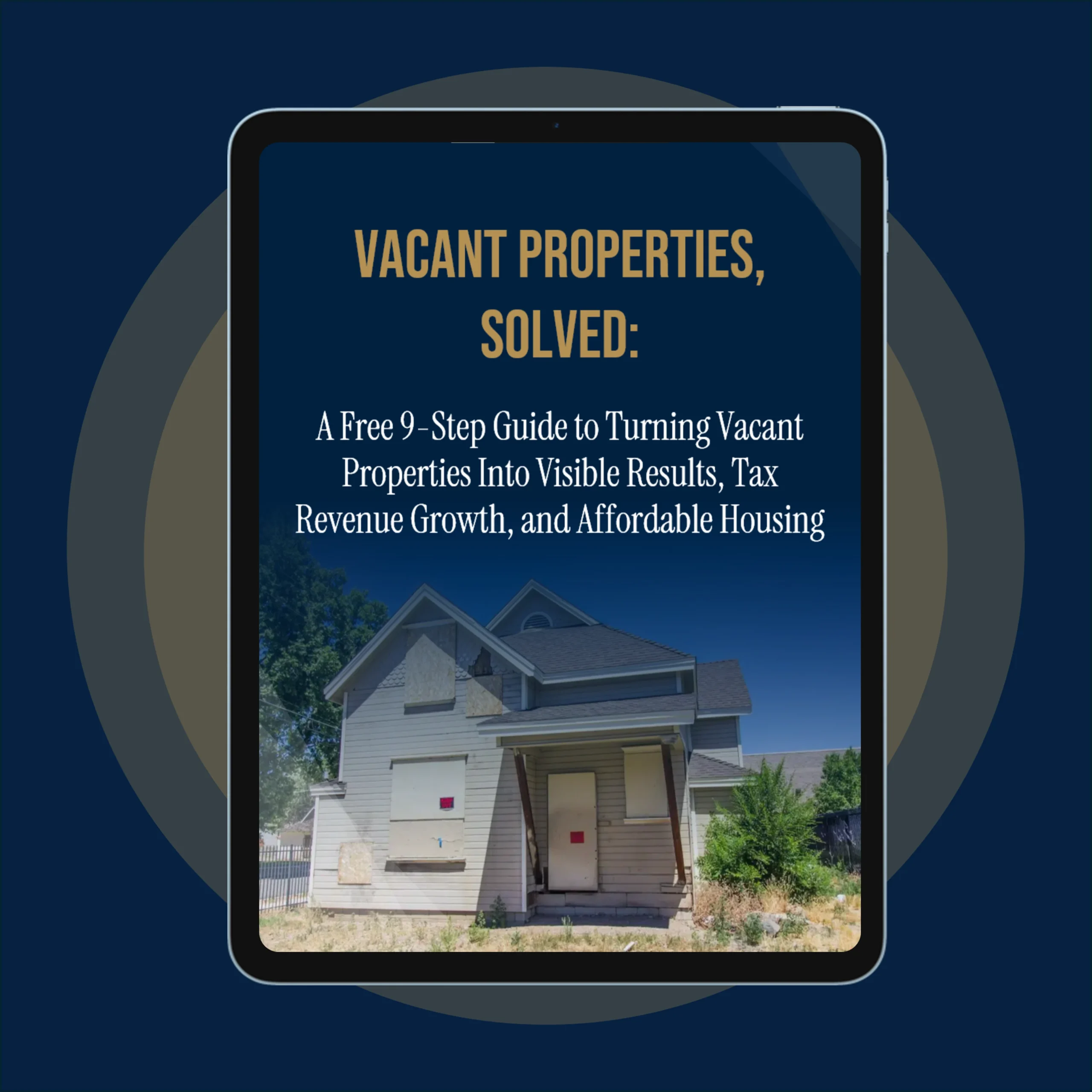
Vacant Properties, Solved
A 9-Step Guide to Turning Vacant Properties Into Visible Results, Tax Revenue Growth, and Affordable Housing
Learn how to unlock affordable housing from the vacant homes your jurisdiction already has — without spending a dime on new construction.
👥 Talk to an Expert
Want to know how many affordable units are hiding in your vacant parcel list? Schedule a consultation with a Parcel Revenue advisor to see how your city or county can start creating affordable housing the smart, efficient way.