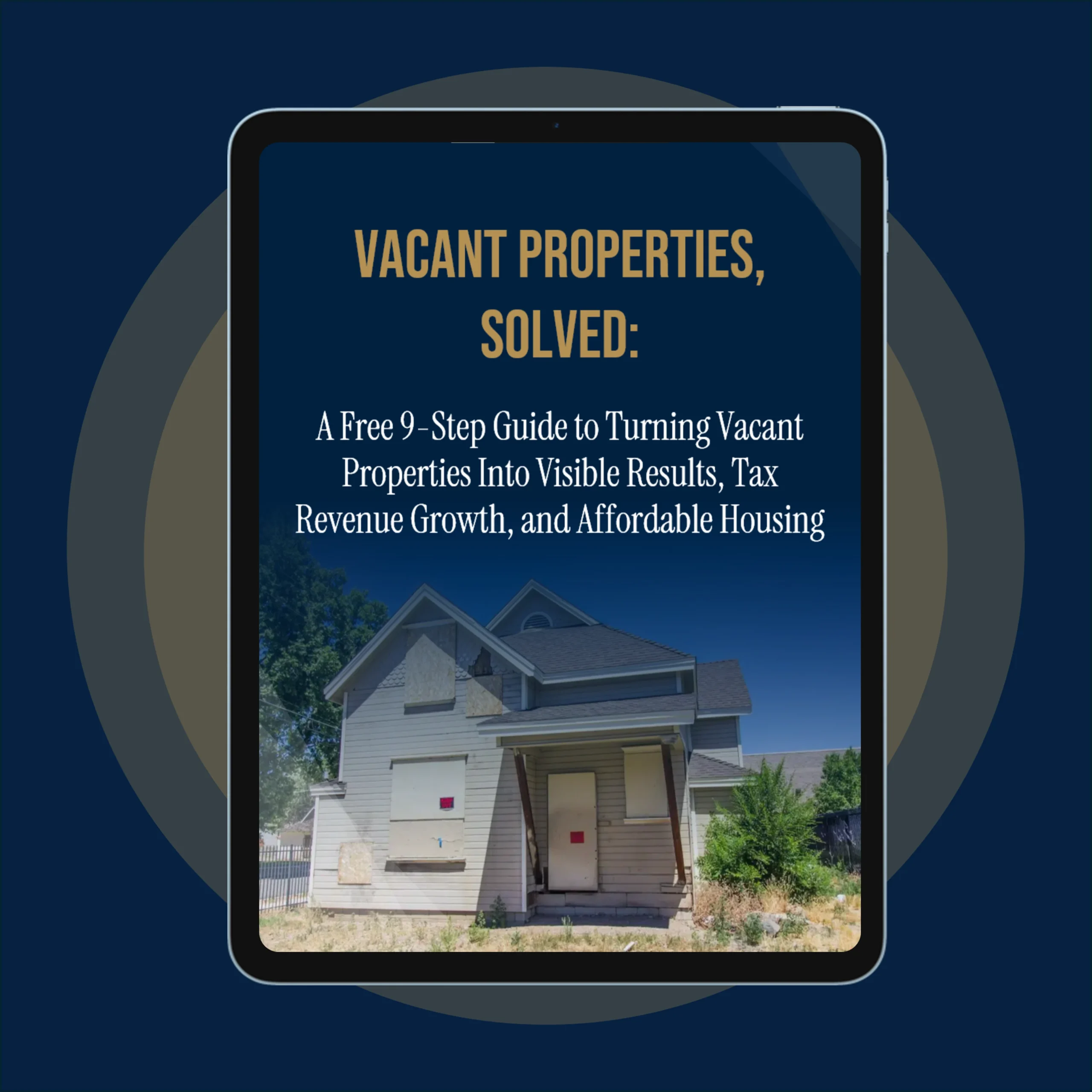
Vacant properties aren’t just a nuisance — they’re a direct threat to the financial health of local governments. Every abandoned home, underutilized building, and stalled renovation isn’t just an eyesore — it’s a source of revenue loss.
Property values affect more than neighborhood aesthetics — they drive property tax revenues, which fund essential services in both cities and counties. In nearly 1,000 local governments studied, property taxes make up 5–15% of total revenue. When vacancies pile up, local revenue stalls — and communities suffer.
But there’s a smarter path forward. By resolving vacancies strategically and using predictive tools like the Virtual Land Bank Platform, local governments can stabilize property values, boost tax revenues, and deliver outcomes that voters can see.
The Link Between Vacancy and Local Wealth
When properties go vacant:
Property values drop, both on the vacant parcel and surrounding lots
- Tax assessments stagnate
- Tax collections shrink
- Public confidence erodes
This isn’t abstract — it hits local budgets where it hurts most.
As values fall, so do tax receipts. That means less funding for schools, roads, police, and public services — which compounds decline and increases constituent frustration.
The Parcel Revenue Model: Turning Land Into Revenue
The name Parcel Revenue exists for a reason: it reflects the core principle that land = revenue. Not just from property taxes — but also from income taxes, sales taxes, and long-term economic activity that depends on stable, productive land use.
The Virtual Land Bank Platform doesn’t just clean up data or enforce compliance. It helps cities and counties:
- Predict which parcels are headed toward vacancy
- Intervene early to resolve underlying issues
- Route properties to responsible buyers
- Track financial recovery at the parcel level
At the center of this model is the PR Score — a proprietary metric that works like a stock ticker for public land value. It reflects:
- Parcel health
- Economic potential
- Market risk
- Tax performance
ust like stock prices react to earnings, market conditions, or external shocks (like COVID or hurricanes), the PR Score changes as property conditions change — and lets governments prioritize based on revenue recovery opportunity.
Case Study: Cuyahoga County, OH
From 2018 to 2025, Parcel Revenue’s Abandoned Homes Project operated across Cuyahoga County, focusing on scattered site redevelopment.
The Results:
- Properties that entered the program gained over $100K in value, from as-is to post-renovation
- Over $500,000 in delinquent property taxes were recovered
- Previously vacant parcels became productive, taxable, occupied assets
This isn’t theory. It’s a replicable model — and the outcomes were visible to residents, councilmembers, and county commissioners alike.
How Local Governments Can Get Started
This is a how-to guide — not just a success story. Here’s what every local government should be doing to reverse vacancy and restore value:
1. Use Predictive Technology to Flag At-Risk Parcels
The Virtual Land Bank Platform identifies properties that are likely to go vacant — before they actually do. This lets counties and cities act early and avoid tax loss.
2. Prioritize Properties With High Revenue Potential
Use tools like the PR Score to sort parcels by potential return — not just visibility or complaints.
3. Resolve Title, Heirship, or Legal Barriers
Many properties stay vacant because of unresolved probate, fractured ownership, or legal confusion. The platform helps route these properties toward resolution.
4. Route Parcels to A-Quality Investors
Don’t just let any cash buyer acquire distressed properties. The system prioritizes qualified, proven rehabbers who deliver full renovations, not speculation.
5. Track Value Recovery by Parcel
Let your finance department and residents see the ROI — both in terms of property value increases and tax base recovery.
The Real-World Risk of Inaction
If local governments don’t solve vacancy, they risk:
- Tax base stagnation
- Resident frustration
- Service cuts or rate hikes
- Increased investor speculation and flips
- Worsening neighborhood decline
Vacancy doesn’t fix itself — and reactive tools alone aren’t enough. Registries, code enforcement, and land banks can’t predict or prioritize. They only activate after the value has already been lost.
📈 The Positive Transformation
By shifting to early prediction and proactive resolution, local governments can:
- ✅ Recover value at the parcel level
- ✅ Rebuild trust with homeowners and voters
- ✅ Reduce speculative churn
- ✅ Stabilize neighborhoods
- ✅ Increase recurring revenue without raising taxes
This is smart fiscal management that also wins community trust.
📥 Download the Free Guide
Vacant Properties, Solved
A 9-Step Guide to Turning Vacant Properties Into Visible Results, Tax Revenue Growth, and Affordable Housing
Learn how to protect and grow your city or county’s tax base — one parcel at a time.
👥 Talk to an Expert
Let a Parcel Revenue advisor show you how the PR Score and Virtual Land Bank Platform work — and how your local government can turn vacant parcels into visible results.